Permanant color
- Becky Betts
- Aug 27, 2025
- 2 min read
Why does the color look to warm or to dark and why didn't it work?⏱️ Oxidative Permanent Cream Hair Color – Deposit Timeline
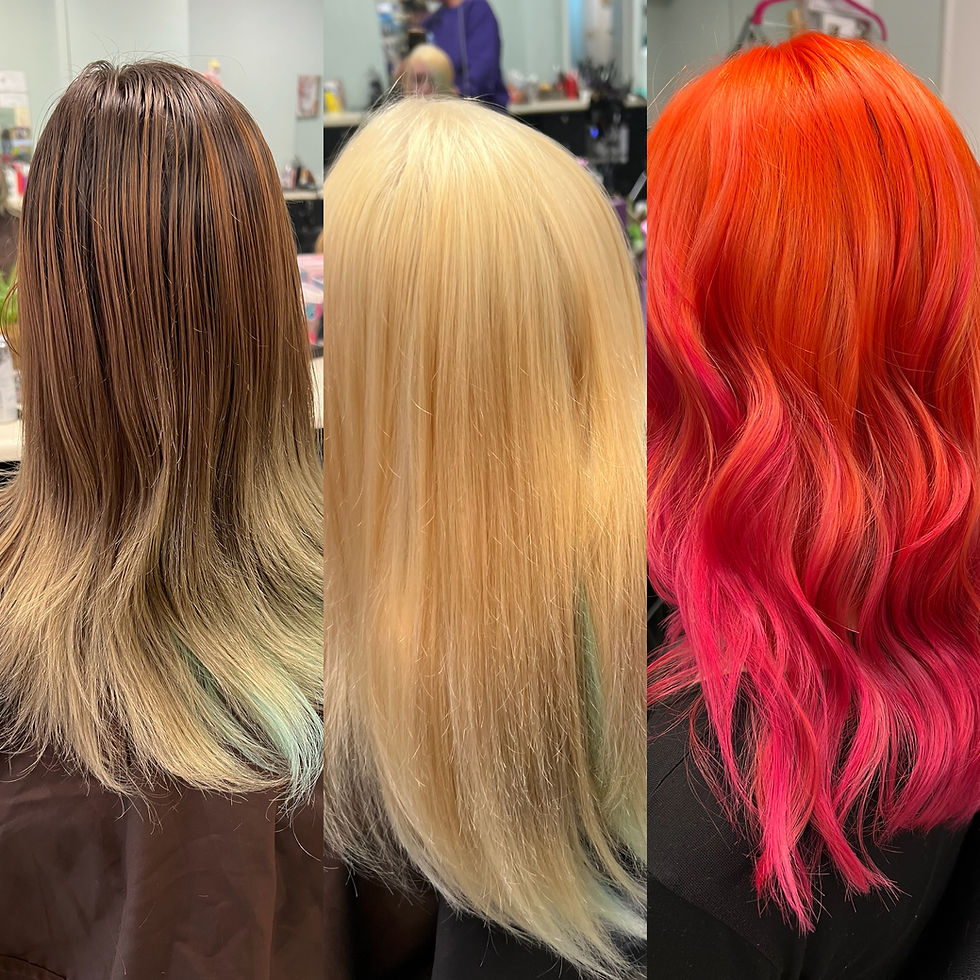
Permanent hair color develops in layers of tone, because oxidative dye precursors (paraphenylenediamines, aminophenols, etc.) oxidize at different rates in the cortex. That’s why you’ll often see hair looking red, orange, or warm partway through processing.
0–10 minutes:
Lift & Early Warmth
Ammonia + developer swell the cuticle and begin lightening natural melanin.
Small dye intermediates (especially red/orange) oxidize fastest.
Result: you’ll often see red/orange warmth dominate in this window.
10–20 minutes:
Blue/Violet Deposition Begins
Larger dye molecules (blue/violet/ash tones) develop more slowly.
By around the halfway point, the cool tones start catching up.
Result: hair shifts from looking overly warm → more neutralizing balance.
20–30 minutes:
Full Color Balance
Oxidation completes for the entire tonal system (red, yellow, blue, green depending on the shade).
The base color stabilizes and appears “true to tone.”
For grey coverage, the full 30–45 min is critical to allow complete development and cuticle closure.
35–45 minutes:
Maximum Depth & Coverage
Complete oxidative polymerization → molecules are now large and locked in.
True tone, maximum depth, and longest-lasting results achieved.
🎨 Why This Matters in Formulation
If you rinse too early, the color will look warmer (reds/oranges present without full blue/green balance).
If you process full time (30–45 min), you allow the slow-developing cool tones to settle in, giving accurate, longer-lasting results.
That’s why “10-minute color” formulas are engineered differently—they adjust the dye balance so blues/greens oxidize faster.
✅ Simple teaching takeaway:
Permanent color looks red/orange first → then blue/ash builds in → final tone shows only after full processing time.



Comments